

In strength training, understanding the seven fundamental movement patterns is essential for building a strong, functional body. These movement patterns—hinge, squat, push, pull, carry, lunge, and rotation—are the foundation of human biomechanics, essential for both athletic performance and everyday activities. By mastering these movements, you can prevent injuries, improve your physical capabilities, and achieve long-term fitness success.
Why the 7 Fundamental Movement Patterns Matter
The seven movement patterns are the core motions that govern how our bodies interact with the world. They are deeply rooted in both our evolutionary biology and our day-to-day tasks. Strength training that emphasizes these patterns does more than just build muscle—it enhances neuromuscular coordination, strengthens proprioception (the body’s ability to sense its position), and boosts metabolic efficiency. Training these patterns ensures balanced development, reducing the risk of imbalances that could lead to injury.
These movements also lay the groundwork for more advanced training, allowing for progression and improved performance over time.
The Hinge Pattern
The hinge pattern is essential for developing strength in the posterior chain—your glutes, hamstrings, and lower back. This movement is crucial for overall power, posture, and athletic performance.
- Beginner: Kettlebell Deadlift
This simple movement introduces the basic hinge, teaching you how to push the hips back while maintaining a neutral spine. - Intermediate: Romanian Deadlift
The Romanian deadlift adds more intensity to the hinge, focusing on the hamstrings and lower back while reinforcing the hip hinge mechanics. - Advanced: Power Clean
A dynamic exercise that incorporates power and speed, the power clean helps develop explosive strength while challenging coordination and timing.
The Squat Pattern
Squats involve the full kinetic chain, engaging muscles from the core to the legs. They are foundational for developing lower-body strength and improving overall movement efficiency.
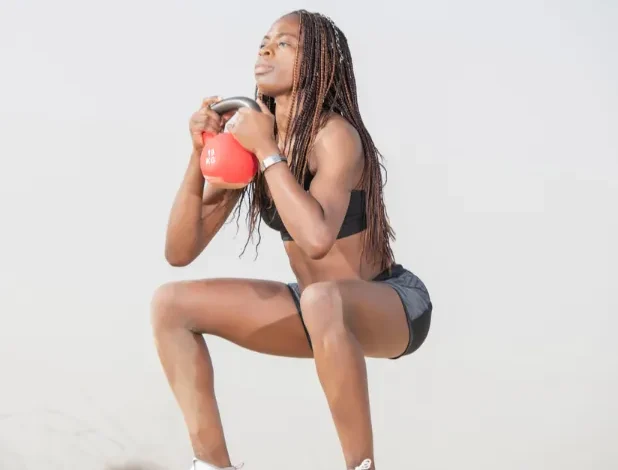
- Beginner: Goblet Squat
Holding a kettlebell or dumbbell at the chest helps beginners maintain an upright posture and control depth, ensuring proper form and building lower body strength. - Intermediate: Barbell Back Squat
This variation adds complexity and load, engaging the core and stabilizing muscles as you squat with a barbell on your upper back. - Advanced: Overhead Squat
This advanced movement challenges mobility, coordination, and strength by requiring you to squat while holding weight overhead, targeting your shoulders, core, and lower body stabilizers.
The Push Pattern
Pushing movements target the chest, shoulders, and triceps, essential for upper body strength and overall functionality.
- Beginner: Push-up
A fundamental bodyweight exercise that builds upper body pushing strength and can be modified to suit various fitness levels. - Intermediate: Dumbbell Bench Press
This variation challenges stability by using dumbbells, which allows for a greater range of motion and engages stabilizing muscles. - Advanced: Overhead Press
A more demanding exercise, the overhead press targets the shoulders, triceps, and core, requiring excellent shoulder mobility and stability.
The Pull Pattern
Pulling exercises strengthen the back, biceps, and forearms, ensuring a balanced upper body workout.
- Beginner: TRX Rows
This suspension exercise is great for developing pulling strength and can be adjusted to match your fitness level by changing the body angle. - Intermediate: Dumbbell Row
Focusing on unilateral strength, the dumbbell row enhances back muscle development and improves core stability. - Advanced: Pull-up
The pull-up is the gold standard in pulling exercises, requiring significant upper body and grip strength. It challenges the entire back and biceps.
The Lunge Pattern
Lunges improve unilateral strength, balance, and coordination, targeting the legs and stabilizing muscles.
- Beginner: Stationary Lunge
This exercise is foundational for building lower body strength, focusing on stability and strength by stepping forward into a lunge position. - Intermediate: Bulgarian Split Squat
This variation increases intensity by elevating the rear leg, focusing more on the quadriceps and glutes while challenging balance. - Advanced: Walking Overhead Lunge
Combining walking lunges with an overhead weight adds difficulty, requiring balance, strength, and coordination.
The Carry Pattern
Carry exercises strengthen the grip, core, and endurance, mimicking real-life tasks like lifting and transporting objects.
- Beginner: Farmer’s Walk
This simple exercise involves walking while carrying weights, enhancing grip strength and core stability. - Intermediate: Suitcase Carry
The suitcase carry adds an asymmetrical load, requiring the core to stabilize against uneven forces, building unilateral strength. - Advanced: Overhead Carry
This advanced carry challenges shoulder stability, core strength, and coordination as you walk with weights held overhead.
The Rotational Pattern
Rotational exercises enhance core strength and the ability to move efficiently in all directions, which is crucial for athletic performance.
- Beginner: Lying Windshield Wipers
This exercise involves rotating the legs while keeping the shoulders grounded, helping to engage the core and build flexibility. - Intermediate: Cable Woodchop
The woodchop uses a cable machine to perform a rotational motion, engaging the core, shoulders, and obliques, improving rotational power. - Advanced: Half Turkish Get-Up
Focusing on the core and shoulder stability, this exercise challenges coordination while strengthening functional movement patterns.
Creating a Comprehensive Strength Training Program
To maximize the benefits of these movement patterns, it’s important to integrate them into a structured workout plan. For beginners, a sample weekly program can include exercises that target each of the seven patterns, such as squats, deadlifts, push-ups, and overhead presses, ensuring balanced development and preventing overuse injuries.
Conclusion
Mastering the seven fundamental movement patterns is essential for any well-rounded strength training program. These patterns serve as the building blocks for all human motion, and by incorporating them into your training, you ensure a balanced, efficient, and injury-free fitness journey. Whether you’re a beginner or an advanced athlete, these movements form the foundation upon which all other exercises and athletic abilities can be built.