
When you toss something into the trash, have you ever wondered where it ends up? Waste disposal is an essential part of modern life, yet most of us don’t stop to think about the journey our garbage takes. The answer is not as straightforward as a landfill; where your trash goes depends on the type of waste and how it’s handled after disposal.
Not everything you throw away has to end up in the garbage. Many common household items, such as paper, glass, aluminum, and plastic, can be recycled and reused, which helps minimize the waste your home generates.
Where Trash Goes: Recycling
Recycling is one of the most effective ways to reduce waste because it allows materials to be reused. While not everything can be recycled, items like plastic bottles, paper, cardboard, glass, and milk cartons can be processed and turned into new products. It’s essential to understand the recycling guidelines in your area to know what can and can’t be recycled. For example, many places now offer mixed recycling, so you don’t need to sort your recyclables by material type—just make sure to clean them before putting them in the bin, as even a small piece of trash can contaminate an entire load.
Recycling helps cut down on carbon emissions, too. The EPA estimates that more than 70% of American waste is recyclable, yet only 30% is actually recycled. A single recycled glass bottle can return to a store shelf within a month, using far less energy than creating a new one. Recycling not only saves energy but also reduces the need to extract raw materials. Other debris, like construction waste, can also be recycled at specialized facilities.
The Untapped Potential of Recycling
Despite its benefits, some materials still go un-recycled. For instance, millions of dollars’ worth of aluminum are thrown away each year, even though aluminum is widely recyclable. Similarly, glass is often overlooked, with billions of glass containers ending up in landfills annually. If recycling access were as simple for glass as it is for paper, the rates of recycling would increase significantly. From 1990 to 2010, paper recycling rose by 89%, proving that accessibility and awareness can make a big difference.
Where Trash Goes: Composting
Food waste is another major contributor to household trash. Around one-third of the world’s food supply is discarded each year. Instead of throwing away food scraps, composting is a great alternative. Similar to how recycling turns paper and glass into new products, composting turns organic waste, like food scraps and yard waste, into nutrient-rich fertilizer for gardens.
Composting not only reduces waste but also lowers greenhouse gas emissions. The process of composting has evolved from simple backyard practices to more advanced, odor-free systems for home use. With the right composting setup, you can turn food waste into valuable compost for your garden, benefiting both the environment and your home.
Where Trash Goes: Transfer Stations and Energy Plants
Not all waste ends up in a landfill. In many cases, it is incinerated to reduce bulk and generate energy. Incineration is used in some cities to burn waste and produce electricity, which is then fed back into the local power grid. This process helps reduce the volume of waste headed to landfills and provides renewable energy.
Some areas don’t have landfills nearby, so waste is often taken to transfer stations, where it is temporarily stored and sorted before being sent to its final destination. These stations play a crucial role in organizing waste and recyclables. Some transfer stations even have Material Recovery Facilities (MRFs), which use machines to sort through mixed waste and extract recyclables, making the process more efficient.
Where Trash Goes: Overseas
Some of the waste generated in the U.S. doesn’t stay within the country. A significant portion is exported to other nations as part of the global waste trade. Often, this waste is toxic or contains hazardous materials. Countries in Asia, Africa, and South America become dumping grounds for electronic waste (e-waste), with places like China and Ghana receiving massive shipments of discarded electronics. While this trade can provide economic opportunities, it also exposes workers to toxic chemicals, raising serious ethical and environmental concerns.
Where Trash Goes: Landfills
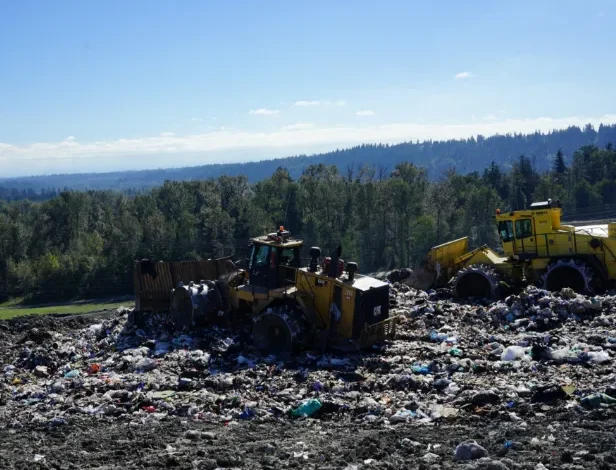
While many waste management practices have improved over the years, landfills remain the final destination for much of the trash in the U.S. Landfills are carefully designed to store waste, not to break it down. They are constructed with layers of clay and plastic to contain the trash and prevent contamination. Drains and pipes are used to collect leachate (the liquid formed when waste breaks down) and to prevent water from seeping into the surrounding environment.
Although modern landfills are much cleaner and more efficient than those in the past, the waste inside still takes a long time to decompose due to the lack of oxygen. In some cases, the waste in landfills is compacted and covered with soil to reduce its size and make it less of a nuisance. However, there is still much work to be done in reducing the environmental impact of landfills.
Conclusion
The journey of trash is not as simple as tossing it in the bin and forgetting about it. From recycling to incineration to landfills, there are many steps and processes involved in waste management. While recycling and composting are two of the most effective ways to reduce waste, the global waste trade and the reliance on landfills still present significant challenges. As individuals, it’s important to take responsibility for how we dispose of our waste and to continue seeking sustainable solutions that reduce our environmental impact.